What Is Satya Yuga?
Explore the divine age of truth and righteousness.
SANATAN KNOWLEDGE
The Eternal Wisdom of Sanatan Dharma

Explore the scriptures, culture, philosophy and spiritual heritage of Hinduism.
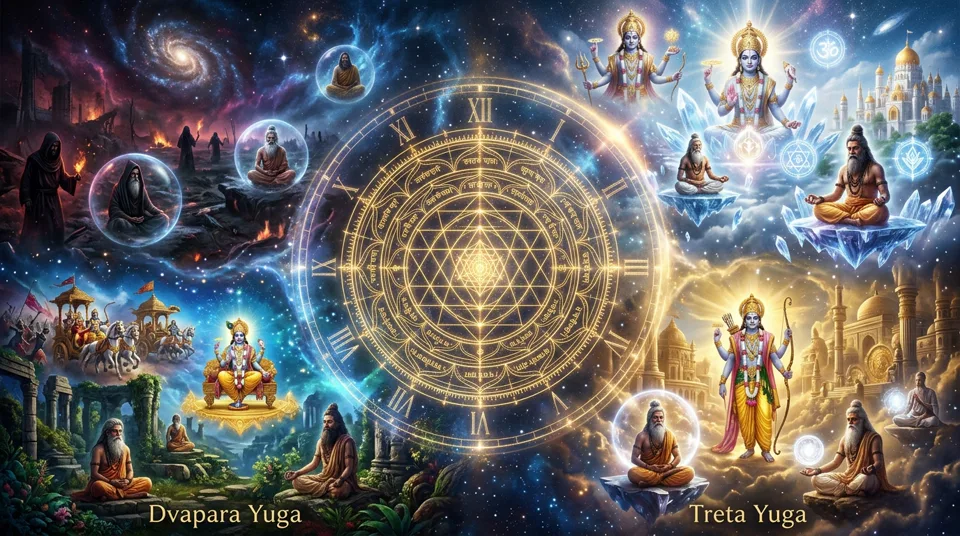
Satya, Treta, Dvapara, Kali
Read Complete Overview →
Vedas, Upanishads, Puranas
Read Complete Overview →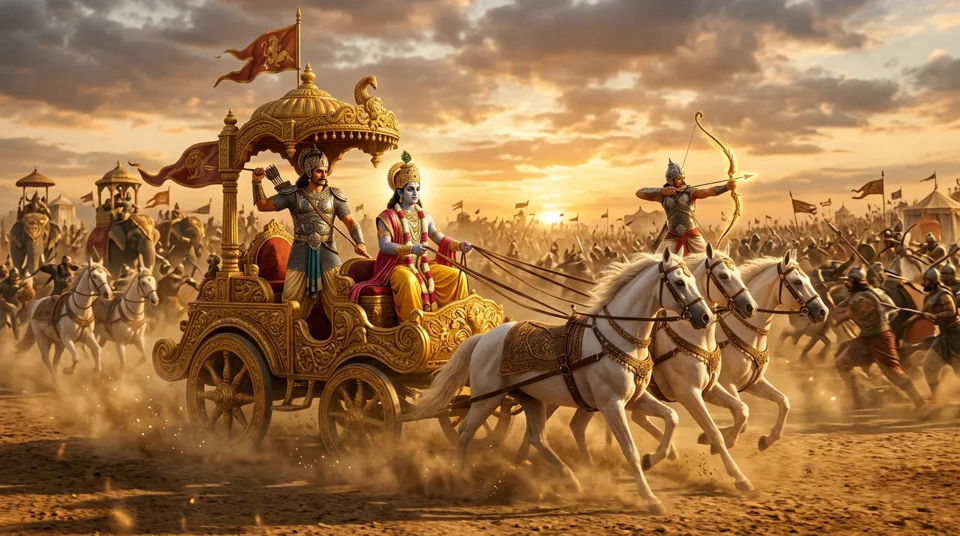
Ramayana, Mahabharata
Read Complete Overview →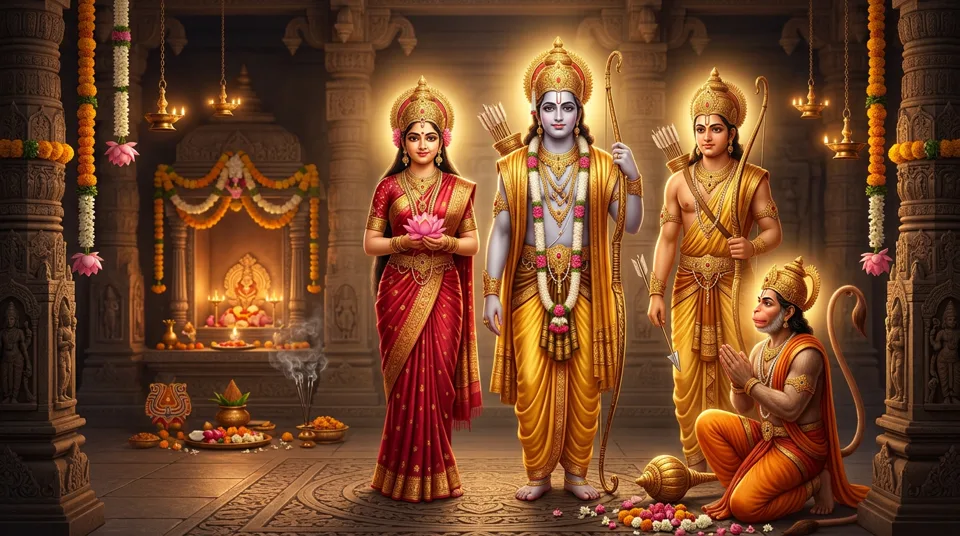
Hindu deities and their stories
Read Complete Overview →
Karma, Dharma, Moksha
Read Complete Overview →
Civilization and Culture
Read Complete Overview →
Puja and Celebrations
Read Complete Overview →
Questions, Answers & Wisdom
Read Complete Overview →Explore the divine age of truth and righteousness.
Timeless wisdom for a better life.
Ramayana, Mahabharata
The Itihasas (literally "thus verily it happened") are epic narratives that translate sublime Upanishadic truths into dynamic human drama, demonstrating how Dharma is practiced amidst real-world dilemmas.
The eternal journey of Maryada Purushottam Lord Rama and the triumphs of righteousness
Organized into 7 Kandas (books) and approximately 500 Sargas (cantos), structured around the sacred Gayatri Mantra syllables.
Transformed by Sage Narada from a highwayman into an enlightened sage, uttering the world's first poetic shloka out of boundless compassion.
Lord Rama exemplifies the highest human ideal of honor, filial obedience, unwavering truth (Satya), and self-sacrificing governance.
Hanuman's heroic leap across the ocean to Lanka, symbolizing unwavering faith, spiritual courage, and boundless divine surrender.
The Ramayana of Maharishi Valmiki is celebrated as the "Adi Kavya" (the First Epic Poem) in world literature. Spanning 24,000 Sanskrit verses across seven Kandas, it chronicles the descent of Lord Sri Rama—the seventh avatar of Lord Vishnu—who chose to live not as a miracle-working god, but as an ideal human being subject to mortal suffering, showing humanity how to uphold Dharma (righteousness) even in the face of immense adversity.
According to sacred tradition, Maharishi Valmiki was inspired after asking Sage Narada: "Who in this mortal world today is virtuous, courageous, righteous, grateful, truthful, and dedicated to the welfare of all beings?" Narada revealed the life of Prince Rama of the Ikshvaku dynasty. Shortly after, witnessing the grief of a female Krauncha bird whose mate was slain by a hunter, Valmiki's sorrow spontaneously crystallized into the very first metered Sanskrit verse (Anushtubh meter):
The epic unfolds across seven monumental books, each capturing a pivotal stage in Rama's earthly mission:
The Ramayana is celebrated because every character embodies a precise ethical archetype:
Two of the most celebrated declarations of virtue from the epic tradition:
When Lakshmana marvels at the golden opulence of conquered Lanka, Lord Rama delivers the timeless lesson of devotion to mother and homeland: