What Is Satya Yuga?
Explore the divine age of truth and righteousness.
SANATAN KNOWLEDGE
The Eternal Wisdom of Sanatan Dharma

Explore the scriptures, culture, philosophy and spiritual heritage of Hinduism.
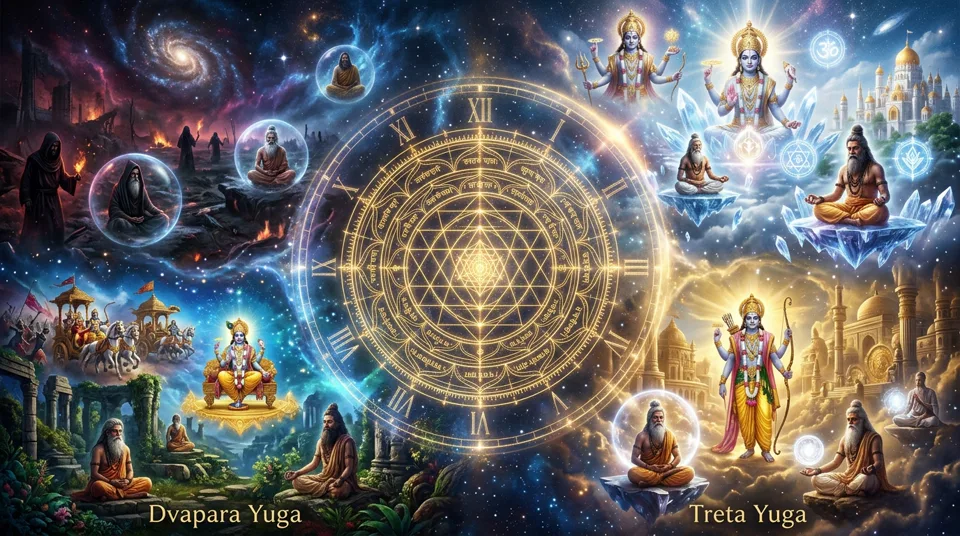
Satya, Treta, Dvapara, Kali
Read Complete Overview →
Vedas, Upanishads, Puranas
Read Complete Overview →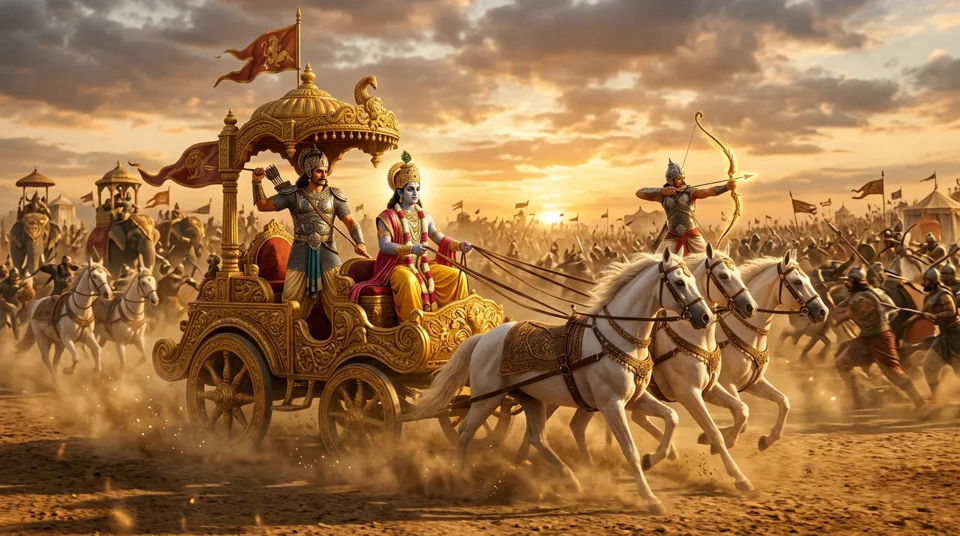
Ramayana, Mahabharata
Read Complete Overview →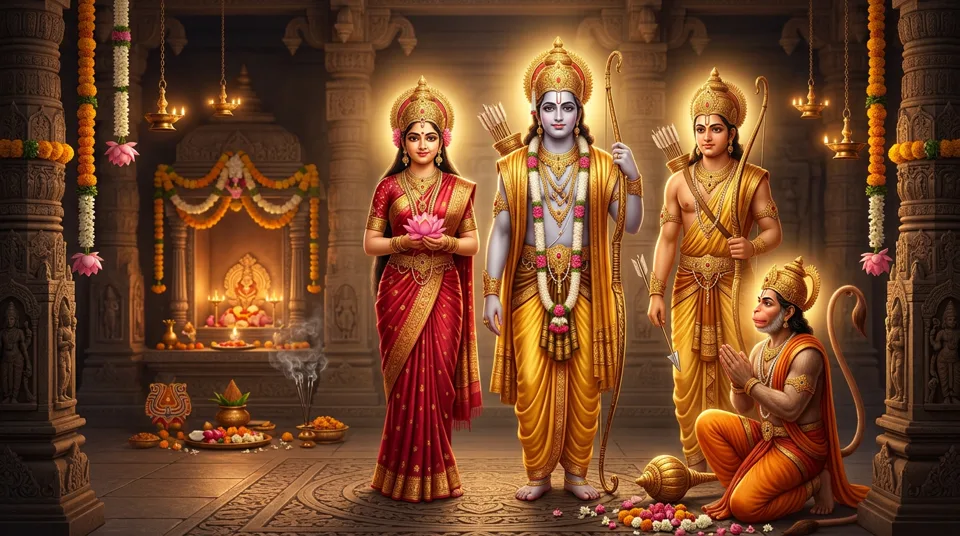
Hindu deities and their stories
Read Complete Overview →
Karma, Dharma, Moksha
Read Complete Overview →
Civilization and Culture
Read Complete Overview →
Puja and Celebrations
Read Complete Overview →
Questions, Answers & Wisdom
Read Complete Overview →Explore the divine age of truth and righteousness.
Timeless wisdom for a better life.
Satya, Treta, Dvapara, Kali
In Sanatan Dharma, cosmic time is not a straight line progressing toward an end, but an eternal, cyclical wheel (Kalachakra). A complete cycle comprises Four Yugas—Satya, Treta, Dvapara, and Kali—spanning 4,320,000 solar years.
Satya Yuga (also known as Krita Yuga, the Age of Perfection or Golden Age) is the inaugural and purest era in the cyclical cosmic wheel of Mahayuga. According to Vedic tradition, this was an era defined by complete harmony with cosmic truth (Satya) and divine moral order (Dharma).
Astronomical Duration: According to classical astronomical treatises such as the Surya Siddhanta and the Vishnu Purana, Satya Yuga spans 1,728,000 human solar years (equivalent to 4,800 divine celestial years, inclusive of its dawn and dusk twilights). It represents 40% of the complete 4,320,000-year Mahayuga cycle.
In this age, Dharma is metaphorically described as a sacred bull standing securely on all four legs: Satya (Truthfulness), Tapas (Austerity and spiritual dedication), Shaucha (Internal and external purity), and Daya (Compassion for all living beings). Morality was not an enforced law, but the spontaneous, natural inclination of every individual.
Human Society & Consciousness: Scriptures depict human life in Satya Yuga as endowed with natural spiritual consciousness, radiant health, and peaceful coexistence. Humans had no necessity for commerce, formal courts, or competitive accumulation of wealth because the earth yielded sustenance abundantly and desires were free from lust and greed. Deceit, sickness, hatred, grief, and jealousy were entirely absent.
Major cosmic events described in Puranic history include the preservation of sacred seed species during the cosmic deluge (Matsya Avatara), the churning of the milk ocean (Samudra Manthan with Kurma Avatara), the rescue of Earth (Bhumidevi) from the cosmic depths by Varaha, and the protection of the child-devotee Prahlada from the tyrant Hiranyakashipu by Lord Narasimha.
The primary spiritual discipline of Satya Yuga was uninterrupted absorption in meditation upon the Supreme Unmanifest Brahman (Lord Vishnu). Spiritual realization required no elaborate physical paraphernalia; the mind itself was a consecrated sanctum.